
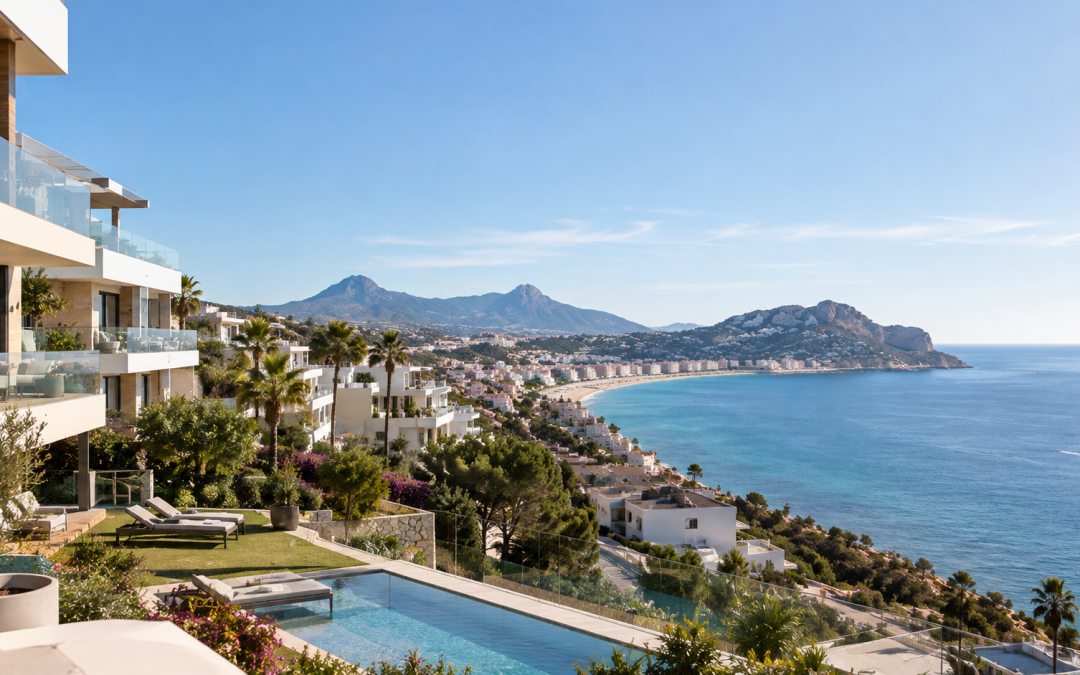
Buying a property on the coast can mean very different things. For some, it is a place to enjoy holidays; for others, an opportunity to start a new chapter and live near the sea all year round.
Although both options share some criteria, needs can change when a home stops being an occasional destination and becomes a primary residence.
Would you buy the same home if you were going to use it for two weeks a year as you would if you were going to live in it for the next ten years?
The answer depends on factors such as location, comfort, costs, and the property’s ability to adapt to your lifestyle.
1. Second Home or Primary Residence: What Use Do You Want to Give It?
Before buying a property on the Spanish coast, it is important to define what you want to use it for.
If you are looking for a second home, you will likely value proximity to the beach, terraces, communal areas, and easy access during holidays.
On the other hand, if you want to live on the coast all year round, other factors come into play: nearby services, layout, connectivity, and daily comfort.
It is also worth thinking about the future. A property you use for holidays today could become your primary residence in a few years.
That is why the question is not only what home you need now, but what options you want to keep open for the future.
2. Living on the Coast All Year: What Changes Compared to Summer?
The experience of a coastal town can vary considerably between August and January.
For this reason, before buying, it is advisable to get to know how the area functions throughout the entire year.
Services Are Also Part of the Location
If you want to turn a property into your primary residence, it is worth considering proximity to:
- Supermarkets and shops.
- Medical centers and pharmacies.
- Public transport.
- Educational centers.
- Restaurants and services open all year round.
It is also important to distinguish between a town with a stable resident population and a development that relies heavily on the tourist season.
Living by the sea does not mean living on vacation: daily routine matters too.
3. The Home That Works in August Must Offer Comfort in January
A home used year-round must meet different needs than a property intended mainly for holidays.
Thermal and acoustic insulation, air conditioning, orientation, and ventilation are aspects worth analyzing before buying.
It is also useful to evaluate the layout:
- Does it have space to work from home?
- Does it have enough storage space?
- Is natural light adequate?
- Does the home adapt to your family’s needs?
In new build developments, technical specifications can provide relevant information on energy efficiency and comfort.
However, features depend on each project. Not all new homes offer the same solutions, so it is important to review their specific features.
4. How Much Does It Cost to Maintain a Home on the Coast?
The purchase price is only part of the cost of a property.
Before making a decision, it is worth considering the expenses associated with the property:
- Homeowners’ association fees.
- Property tax (IBI).
- Insurance.
- Utilities.
- Maintenance.
- Pool and gardens, where applicable.
- Travel and property management.
In a second home, the property may remain vacant for extended periods and require checks between stays.
In a primary residence, utility usage may be higher, but daily occupation facilitates supervision and maintenance.
There is no option that is always cheaper. The actual cost depends on the property’s characteristics, location, and usage.
5. Buying for the Future: A Home That Adapts to Your Life
Housing needs can change over time.
Someone who buys a second home may decide to move to the coast in the future. Their work, family, or personal circumstances may also change.
For this reason, certain features can provide flexibility:
- Adaptable layout.
- Work-from-home spaces.
- Additional bedrooms.
- Storage.
- Accessibility.
- Proximity to healthcare services.
It is not necessarily about buying a larger home, but evaluating whether the property can respond to different stages of life.
Could your current home adapt to your needs if you wanted to live on the coast year-round in five or ten years?
6. Location and Connectivity: From the Airport to Everyday Services
Connectivity can have varying degrees of importance depending on how the home is used.
For buyers of a second home, distance to the airport and connections to their city of origin can be key factors.
For those wanting to live on the coast year-round, commutes to work, public transport, and proximity to services also gain importance.
A beachfront property may be attractive, but it is important to analyze how it integrates into your daily routine.
The ideal location depends on your priorities and the lifestyle you want to maintain.
7. New Builds on the Coast: Choosing According to Your Needs
Buying a new build property on the coast can be an option for those seeking specific design, comfort, and energy efficiency features.
When comparing developments, it is worth considering:
- Layout and floor area.
- Terraces and outdoor spaces.
- Climate control and efficiency.
- Communal areas.
- Accessibility.
- Location and nearby services.
- Residential complex maintenance fees.
A swimming pool may be a priority for someone looking for a second home. For someone intending to live year-round, proximity to shops, green areas, or sports facilities may hold different value.
It is not about choosing more amenities, but finding a home that matches how you will actually use it.
Conclusion: Buying a Home on the Coast Means Deciding How You Want to Live
Choosing between a second home and a new primary residence for the whole year depends on your current needs and future plans.
Location, comfort, services, connectivity, and costs are key factors to analyze before buying.
A home may be perfect for holidays without meeting the needs of a permanent residence. Likewise, a property designed for year-round living can offer a satisfying holiday experience.
The decision begins by understanding the role the property will play in your life, today and in the future.
If you are thinking of buying a new build home on the Spanish coast, discover Sonneil developments and find the space that best fits your lifestyle.


